

Elon Musk promised a "historically accurate" Odyssey made by AI. This weekend, Grok Imagine delivered seven minutes of it, and the early verdict is that it looks like a movie and doesn't feel like one.
What actually dropped
Grok Imagine's account posted Episode 1 of an AI-generated The Odyssey on X, crediting "creative collaboration" with Wonder Studios and director Dev Walker. Outlets differ on the date: one report says October 23, another October 25, so call it the weekend. The runtime is about seven minutes, and Musk shared it with the caption "Odyssey with Grok Imagine."
The footage shows Odysseus sharpening a knife, Penelope urging him to go, and a sail for Troy, with Telemachus growing up in cutaways. That is a long way from the full-length feature Musk said in July that Grok would make before the end of 2026. Variety called this a partial follow-through, since only the first episode exists. How many episodes are planned, and when the next arrives, hasn't been reported.
The Nolan angle
This isn't happening in a vacuum. Musk has spent months criticizing Christopher Nolan's The Odyssey, with the casting of Lupita Nyong'o as Helen of Troy at the center of it. Around this release he went after the casting again. Director Scott Derrickson answered on X, questioning Musk's grasp of cinema and dismissing his opinions on art.
Nolan's version is doing fine. It has grossed roughly $1.79 billion worldwide, per one daily roundup (another outlet says $1.78 billion), which makes it the biggest film of Nolan's career and Universal's biggest ever.
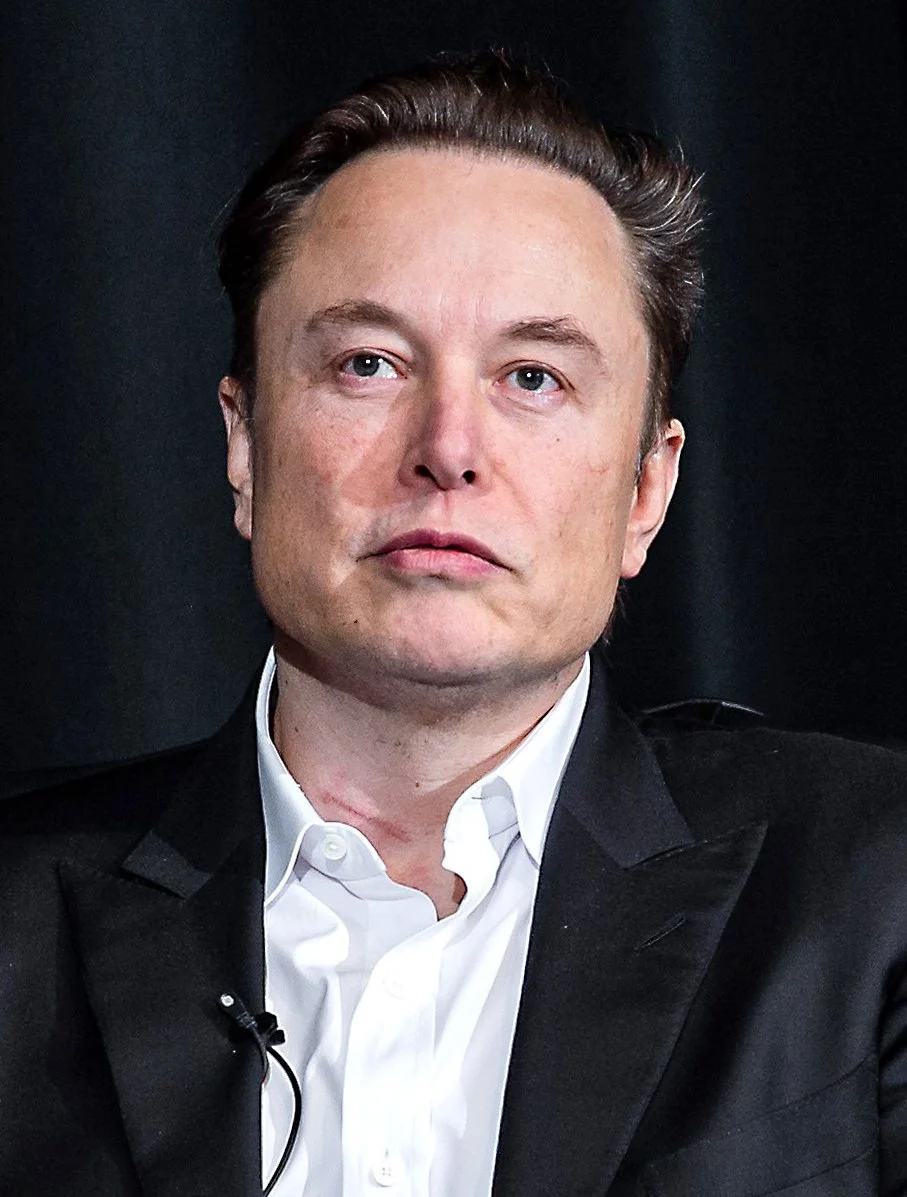
Photo: U.S. Air Force / Trevor Cokley, public domain, via Wikimedia Commons. Featured image: Christopher Nolan, photo: Georges Biard / Wikimedia Commons, CC BY-SA 4.0.
How it landed
The reaction is blunt. TechCrunch wrote that the footage lacks "any sense of artistry, inspiration, or human interest." The Telegraph said the flat, expressionless voices give it a "zombie-like quality." Mashable noted that every character is white and that Odysseus is the only named character. Viewers also pointed to Penelope looking different from scene to scene and to costumes that mix medieval and Roman looks, which is awkward for a project sold on accuracy.
Some people did praise the photorealism, and that part deserves credit. Convincing spectacle from a prompt would have sounded like science fiction three years ago.
The real problem is continuity
Here is the film-nerd read. Spectacle is the easy part of AI video. What a feature needs is continuity: the same face across 90 minutes, a performance that builds, a cut that means something. Penelope changing faces is not a glitch to patch, it's the whole gap. A shot can be gorgeous and still tell you nothing about who is in it.
The "historically accurate" label is also doing heavy lifting. Homer's epic has no single authoritative look, so accuracy was always going to be a matter of choices, and choices are what a director makes. Seven minutes in, the choices are mostly the model's.
Musk's deadline is the end of the year, so we'll find out soon whether Episode 2 closes that gap or just adds more minutes of the same.