

NAZA is a somber, frightening documentary, and it earns both words.
The film comes from Israeli journalists Yuval Abraham and Rachel Szor, and it is built from anonymous interviews with 24 IDF soldiers and intelligence personnel. They are shot in silhouette on Tel Aviv rooftops at night. Behind them, the lit windows of apartment buildings glow in the dark, TVs on, people going about their evenings. It is a quiet, effective contrast: ordinary life in the background while the people in the foreground describe what they did at work.
What "NAZA" means
The title is a Hebrew acronym for collateral damage, and that is the film's subject. According to the interviewees, targets were assessed by calculating how much collateral damage was acceptable for each one, and in practice there was no real ceiling. After October 7th, they describe a level of hatred where anyone in Gaza could be treated as connected to a target. Targets were generated with AI systems, including one called Lavender, fed by phone data. Someone who only matched a pattern could be flagged and killed. The soldiers say they knew they were killing people who had nothing to do with anything, babies included.
The verification problem
This is the part that hit me hardest. I have had training in using AI for investigative work, and the first rule drilled into you is that nothing the system produces stands on its own. Everything gets verified by human eyes after the fact. That is the whole safeguard.
The film shows that safeguard failing in two ways. Sometimes the check simply did not happen, because the technology was new and the system was trusted. But other times humans did review the targets, everyone up the chain knew what was going on, and they approved it anyway. That is the terrifying part. The human check existed, and it did not stop anything.
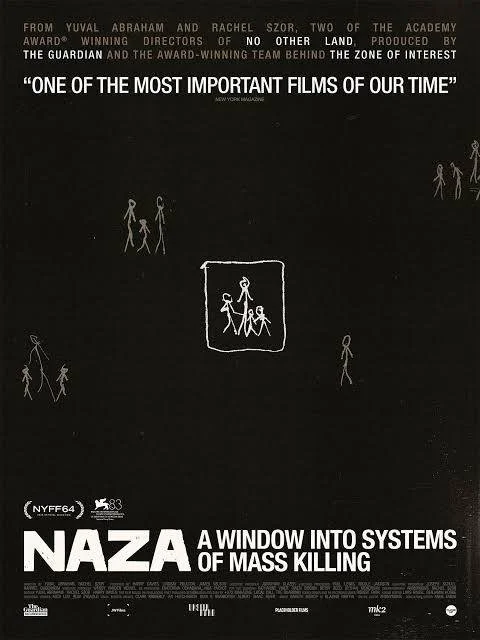
NAZA poster. Credit: The Guardian
The people in the chair
The psychology is just as disturbing as the process. Many of these soldiers start questioning their role, but they were told to trust the system and that they were doing the right thing. One admits to being increasingly responsible for the deaths of thousands. Others deflect, treating it as just part of the process. That mix of denial, rationalization and slow doubt is where the film gets its power.
It is not an easy watch, and it is not meant to be. NAZA is a record of how ordinary people, working inside a system, can take part in something monstrous.