

In 1968, somebody at the Walter Reade Organization changed a title card, and forgot a single line of text. That line was a copyright notice. Leaving it off turned Night of the Living Dead into one of the most watched, most copied, and most remixed horror films ever made. It also meant the people who made it never saw the money they should have.
It's one of the strangest stories in film history, and it explains a lot about why Romero's ghouls are still shambling across every screen you own.
A $114,000 Movie From Pittsburgh
George A. Romero wasn't a Hollywood insider. He was making commercials and industrial films in Pittsburgh with a group of friends who pooled money to shoot a feature. The budget landed somewhere around $114,000. The cast included investors, crew members, and locals. The farmhouse was slated for demolition, so nobody minded if it got wrecked.
The shooting title was Night of the Flesh Eaters. When the Walter Reade Organization picked the film up for distribution, they swapped in a new name: Night of the Living Dead. A new title meant a new title card.
The Missing Line
Under the US copyright law in force at the time (the 1909 Copyright Act), a published work needed a visible copyright notice. No notice, no protection. The original title card carried one. The new one didn't.
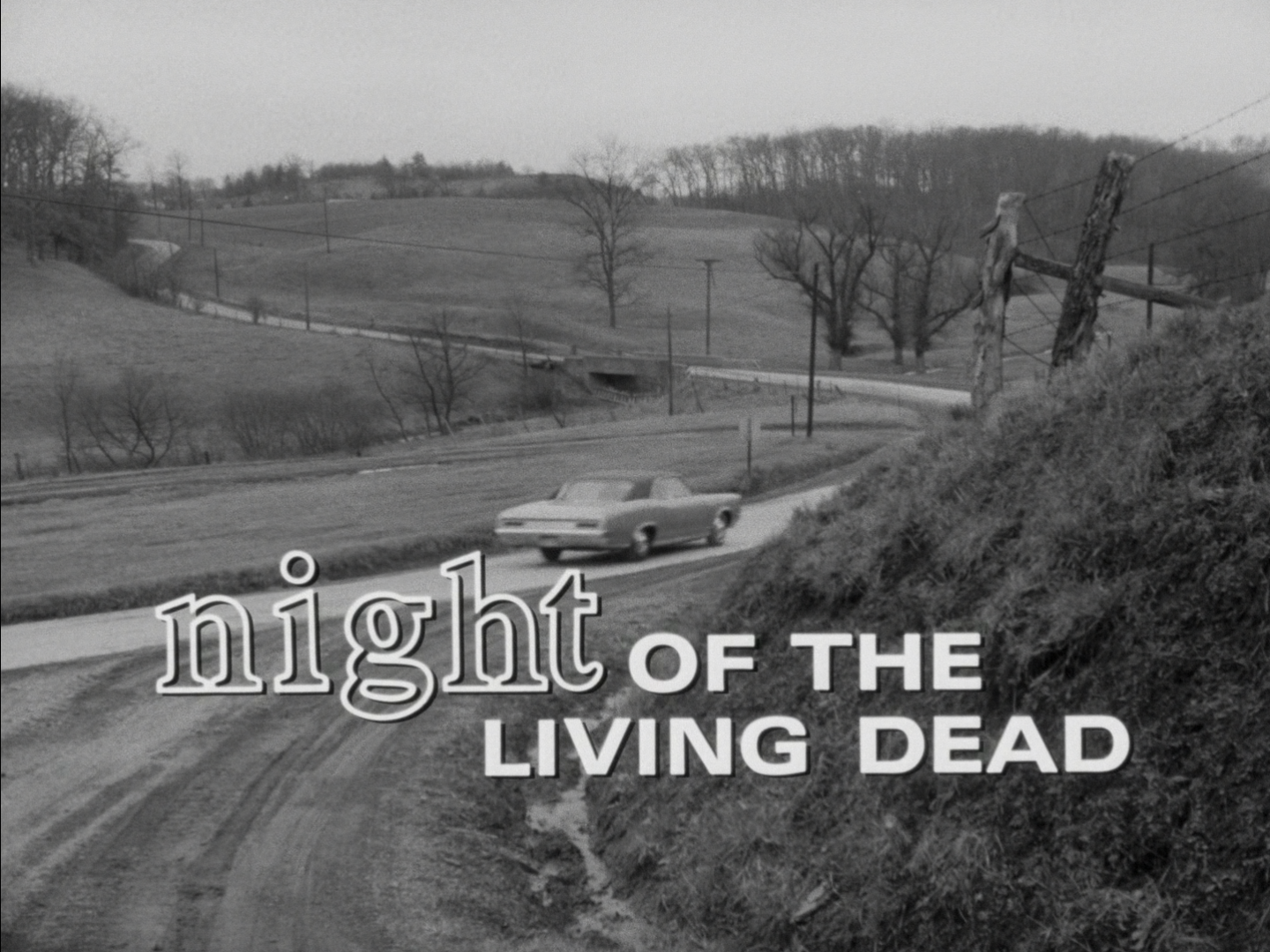
The 1968 title card, with no copyright notice in sight. Image: public domain, via Wikimedia Commons.
When the film opened in October 1968, it entered the public domain on day one. Anyone could copy it, sell it, screen it, or cut it up, and they didn't owe Romero or his partners a cent.
The filmmakers did see some theatrical income, but the film went on to gross millions. They spent years fighting over money with distributors, and the home video boom that followed paid everybody except them.
Why Public Domain Made It Immortal
Here's the twist. That mistake is a big part of why the film is so famous.
Because anyone could sell it, everyone did. Night of the Living Dead turned up on late-night TV, in bargain bin VHS tapes, on cheap "50 horror classics" DVD sets, and eventually on every streaming service and YouTube channel that needed free content. For decades it was simply always there. Generations of horror fans met it by accident.
It was also free to remix. There are colorized versions, a 3D version, parodies, and an animated retelling. In 1999 a "30th Anniversary Edition" added new scenes shot by co-writer John Russo. Fans largely hated it, but nobody could stop it. Even the 1990 remake, directed by makeup legend Tom Savini, was partly a way for the original team to finally own a version of their own story.
The Rules It Wrote (Without Saying "Zombie")
The film never uses the word "zombie." The characters call the dead "ghouls." In 1968, a zombie was a voodoo figure from Haitian folklore, a person controlled by someone else. Romero's dead had no master. They were slow, relentless, hungry for the living, and could only be stopped with a shot to the head.
Every modern zombie story still runs on those rules, from 28 Days Later to The Walking Dead to The Last of Us. Part of the reason the template spread so widely is that the film itself was everywhere, free to watch and free to study.
Ben, and That Ending
The other reason the film still lands is Duane Jones. He plays Ben, the calm, capable lead holding the farmhouse together, and he gets top billing. A Black actor leading a horror film in 1968 was rare. Romero always said he cast Jones because he gave the best audition, not to make a statement. But the film makes one anyway.
The ending is still brutal. Ben survives the night, only to be shot by a posse of armed white men who mistake him for a ghoul. Grainy still photos of his body being dragged onto a fire play over the credits. They look like news photographs, because that's exactly what they're meant to evoke. According to Romero, the team heard Martin Luther King Jr. had been assassinated while they were driving a print to New York to find a distributor. The film doesn't need to explain its ending. Audiences in 1968 understood it immediately.
Where to Watch It (Properly)
Because it's public domain, you can watch Night of the Living Dead free in a dozen places. Most of those copies are muddy, cropped, or taken from worn prints. If you want to see what Romero actually shot, the Criterion restoration (built from the original camera negative, with the film's previously unseen workprint cut as a bonus) is the version to get. [AFFILIATE: Night of the Living Dead Criterion Collection Blu-ray — the best-looking restoration, with the workprint and extensive production history extras]
It's the rare case where the free version and the good version are very different movies.
The Accident That Made It Last
Romero went on to make Dawn of the Dead, Day of the Dead, and a whole career out of the monsters he invented in a Pittsburgh farmhouse. But it's worth remembering that his first film became a cornerstone partly by accident. A missing line on a title card cost its makers a fortune, and handed the film to everyone. Horror has been feeding on it ever since.