

Where Did the Smurfs Really Come From? The Folklore Theory vs. The Facts
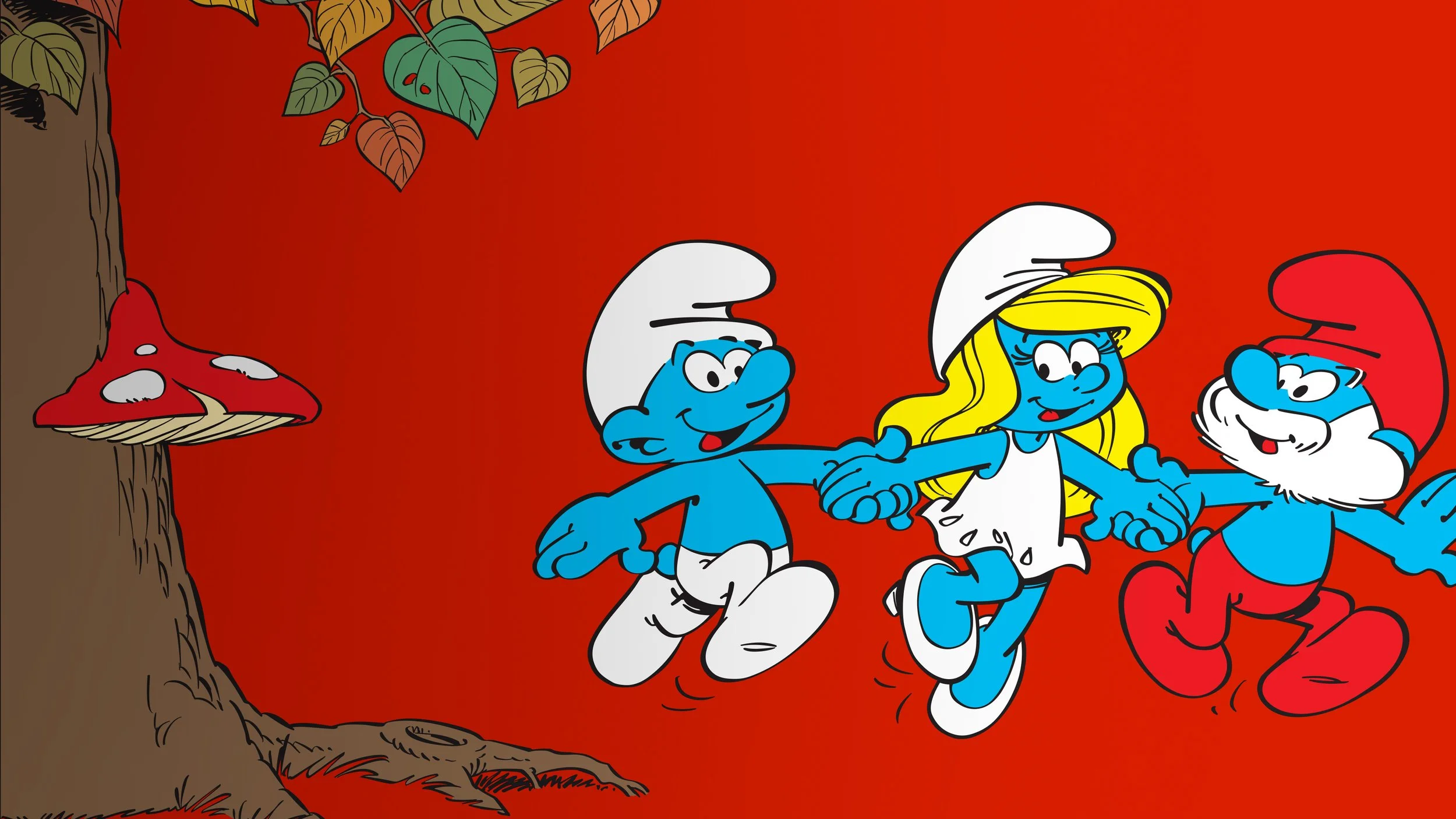
A podcast clip has been making the rounds lately, and it's the kind of thing that rewires how you see a childhood classic.
The claim goes like this: the Smurfs weren't born from a Belgian cartoonist's imagination. They were inspired by something much older and considerably darker — a Northern European folklore tradition about people who freeze to death in winter, aren't discovered until the spring thaw, and are found blue-skinned, half-buried in snow, with mushrooms already sprouting around their bodies.
Once you hear it, you can't quite unsee it. The blue skin. The little hats that look suspiciously like snow-capped heads. The mushroom houses.
It's a great story. But is it true?
That's what we're here to find out.
Why This Kind of Story Has Such a Hold on Us
Before we get into the evidence, it's worth asking why the "dark origin" narrative is so irresistible in the first place.
There's an entire content genre built around this impulse — the idea that beloved, innocent things have sinister roots hiding just beneath the surface. The Brothers Grimm fairy tales were actually brutal before Disney sanitized them. Nursery rhymes were coded political commentary. Your favorite cartoon was really about [insert unsettling subtext here].
Some of these are true. Many are not. But all of them tap into the same psychological itch: the adult desire to complicate the things we loved as children, to find hidden depth, to feel like we're seeing past the surface.
That doesn't automatically make the Smurfs folklore theory wrong. It just means we should look at it with clear eyes — take it seriously without taking it on faith.
Taking the Folklore Theory Seriously
Here's the thing: the theory isn't built on nothing.
There are real folkloric traditions in Northern Europe that share some DNA with the visual language of the Smurfs, even if the specific "frozen corpse" claim hasn't been traced to a named, documented source.
Blue as a symbol of cold and death is embedded across European cultural history. In Norse and Germanic traditions, pallor and blue-tinged skin were associated with the dead, with winter spirits, and with liminal beings caught between worlds. That's not invented — it's a genuine thread in the symbolism of the region.
Small hidden creatures are absolutely a fixture of Scandinavian folklore. Tomtes, nisser, huldrefolk, and similar beings populate Nordic mythology as small, often benevolent-but-unpredictable figures living just outside human society — in forests, under hills, in the margins. The Smurfs' social structure, their hidden village, their relationship to the human world — it rhymes with this tradition in interesting ways.
Mushroom folklore across Northern Europe is genuinely eerie and well-documented. Fairy rings — naturally occurring circles of mushrooms — were considered cursed ground, portals to the otherworld, or sites of supernatural activity. The association between mushrooms and hidden, magical small beings has deep roots that predate any cartoon.
So there's real folklore in the neighborhood of this theory. The cultural ingredients exist. The visual echoes are there if you're looking for them.
The problem is the leap from "these things rhyme" to "this is where the Smurfs came from." That's where the sourcing runs out.
The Actual Origin — Peyo and 1958 Belgium
Pierre Culliford — known by his pen name Peyo — was a Belgian cartoonist working in the tradition of bande dessinée, the Franco-Belgian comics style that also gave the world Tintin and Asterix. It's a rich, serious artistic tradition, and Peyo was a significant figure within it.
The Smurfs didn't start as their own thing. They first appeared in 1958 as supporting characters in Peyo's existing comic strip Johan and Peewit — a medieval adventure series. Reader response to the little blue creatures was strong enough that Peyo eventually spun them off into their own series, The Smurfs, in 1959.
The origin of the word "Smurf" itself is one of those genuinely charming documented stories. During a dinner with fellow cartoonist André Franquin, Peyo forgot the French word for salt and improvised — asking Franquin to pass the schtroumpf. The two ran with the made-up word as a joke throughout the meal, and Peyo eventually used it for his new characters. In French they're Les Schtroumpfs. "Smurf" is the English adaptation.
The blue color and mushroom houses were Peyo's visual design choices — practical, stylistic, and rooted in the whimsical storybook aesthetic of mid-century European illustration. Not death imagery. Not frozen corpses. A cartoonist making deliberate creative decisions about how to make small fantasy creatures visually distinctive and appealing.
This is all documented. Peyo gave interviews. There are biographies. The historical record here is reasonably solid.
Where the Theory Actually Breaks Down
The specific claim — that there is a named Northern European folklore tradition involving blue-skinned frozen corpses discovered in spring, surrounded by mushrooms, that directly inspired the Smurfs — has not been traced to a verifiable source.
That matters. Not because folklore is always perfectly documented, but because the claim is very specific. A general vibe of "European small-creature mythology" is real. The precise image of the frozen dead with mushroom houses is a different claim, and it needs sourcing.
What we're likely dealing with is a pattern-matching story — the kind that emerges when someone notices that two things look similar and constructs a lineage between them. It feels like an origin because the visual echoes are genuinely there. But resemblance isn't the same as causation, and "I noticed these things look alike" isn't the same as "one came from the other."
The podcast format — conversational, fast-moving, built on the energy of a compelling story — isn't always the best environment for that distinction to get made carefully. That's not a criticism of podcasts. It's just the nature of the medium.
What's Actually Interesting Here
Here's the thing though: the real Smurf discourse is, arguably, more interesting than frozen corpses.
Since the 1980s, the Smurfs have been seriously analyzed as an accidental Marxist allegory — a classless, moneyless, collective society led by a benevolent patriarch. Papa Smurf in his red hat. The village as commune. Scholars and critics have written about this with genuine rigor.
More controversially, the character of Gargamel — the scheming, hook-nosed villain obsessed with gold — has been critiqued as an antisemitic caricature. Peyo himself denied any such intention, and the debate remains unresolved, but it's a real conversation that serious people have engaged with seriously.
These are documented, sourced, substantive debates about what the Smurfs might mean and where their cultural assumptions come from. They don't require a mysterious unverified folklore backstory to be compelling.
So, Where Did the Smurfs Really Come From?
The honest answer: a talented Belgian cartoonist, a dinner table joke about salt, and a medieval adventure comic that needed some memorable side characters.
The folklore theory taps into real traditions — small creatures, blue symbolism, mushroom mythology — but the direct line to Peyo's work hasn't been established. What exists is a compelling set of visual echoes that someone, at some point, stitched into a narrative. That narrative spread because it's a good story. Good stories do that.
None of that makes the Smurfs less interesting. If anything, the gap between the dark myth and the warm, slightly absurd reality — a cartoonist forgetting the word for salt — says something worth sitting with. We keep reaching for darkness in the things we love, when sometimes the origin is just a person at a dinner table, making something up, and deciding it was good enough to keep.
Have you seen the podcast clip making this claim? Drop the source in the comments — we'd love to track down where this one actually started.