

The Real CIA Program Hidden Inside Apocalypse Now
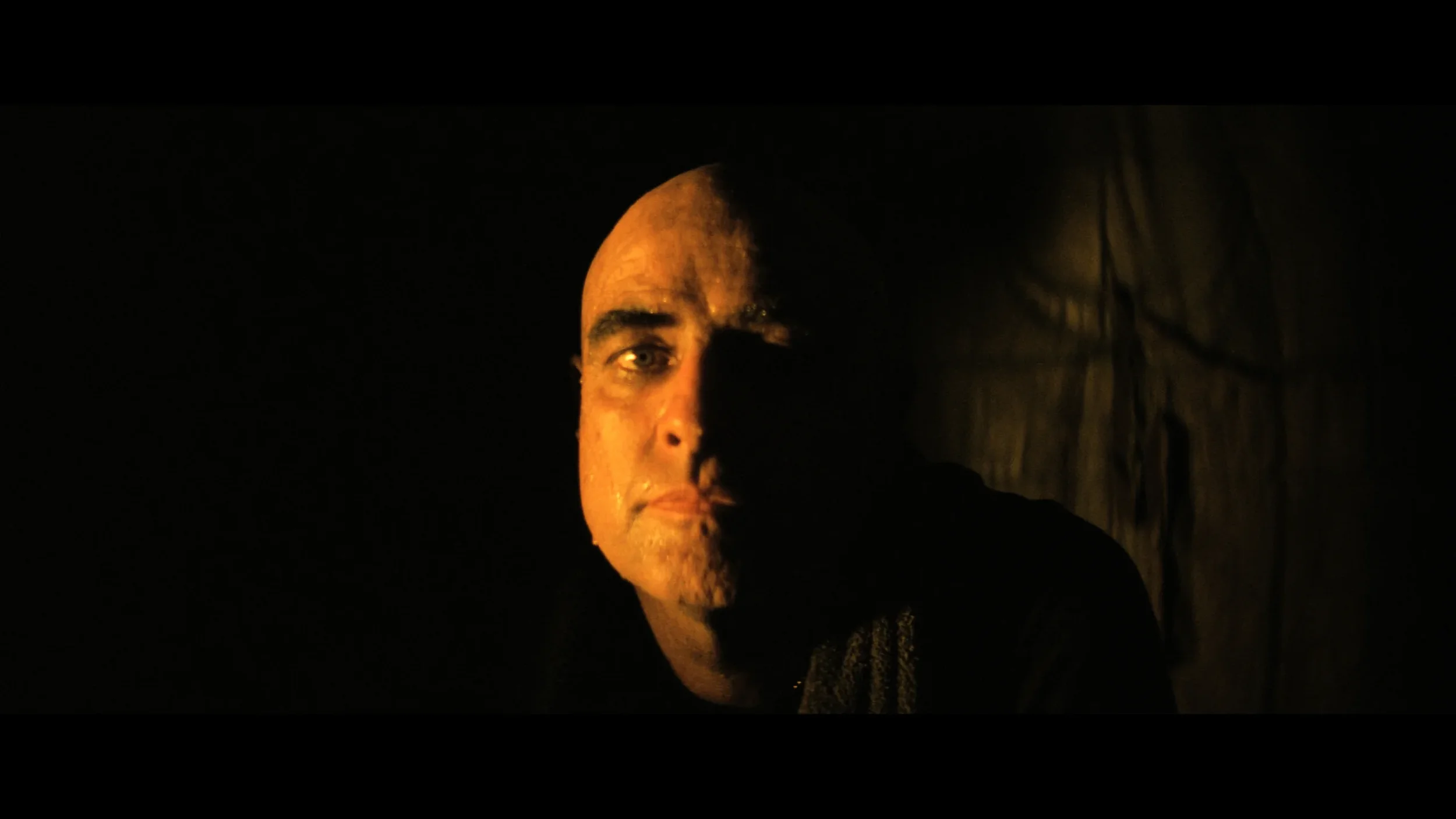
Marlon Brando as Kurtz, Apocalypse Now (1979). The shadow wasn't an artistic choice. It was a practical one.
The police show up to the set and start confiscating passports. Not because of the drugs, though there are plenty of those. Not because of the weapons. Because of the bodies. Real ones. Human corpses, purchased from a grave robber, used as set dressing on the most expensive and chaotic film shoot in Hollywood history.
Most people know Apocalypse Now was a troubled production. What they don't know is how far down it actually goes.
238 Days in the Jungle
In 1976, Francis Ford Coppola flew to the Philippines for what was supposed to be a 14-week shoot. He left 238 days later, having spent 30 million dollars, most of it his own money, secured by mortgaging his home. He threatened suicide three times on set. His leading man suffered a heart attack in the jungle and was given last rites by a priest speaking a language he didn't understand. Coppola told the press it was heat stroke and kept filming.
The Philippine military lent the production their helicopters for the iconic Ride of the Valkyries sequence. What nobody put in the contract: the country was in the middle of a real civil war. Mid-scene, mid-take, the pilots would get the call and peel off into the mountains to drop real ordnance on real people. When the helicopters came back, there was blood on the floorboards.
Marlon Brando arrived 300 pounds overweight, having read neither the script nor Joseph Conrad's novella the film was based on. Coppola spent a week reading the script aloud to him in his trailer. Brando then improvised for hours, philosophical monologues, some brilliant, some incoherent, all recorded because nobody knew what else to do. Cinematographer Vittorio Storaro solved the 300-pound problem by drowning Brando in shadow, filming only fragments of his face in near-total darkness. The most iconic villain in modern cinema exists because the director had no other choice.
Before Coppola, There Was Lucas
What almost nobody mentions is where this film actually started. In the late 1960s, George Lucas and screenwriter John Milius had a plan to shoot the story guerrilla-style, small crew, 16mm camera, during the actual Vietnam War, while it was still happening, as a direct political act. The studios killed it. The war ended. Coppola picked it up and decided to do something arguably more insane: recreate Vietnam in the Philippine jungle with 200 people and an unlimited budget. Lucas wanted to document a war crime. Coppola accidentally committed one instead.
The Part Nobody Talks About
Here's where it gets darker. Willard's mission, to find a rogue soldier and terminate with extreme prejudice, is not a fictional conceit. It is a precise description of Operation Phoenix: a real CIA program running throughout the Vietnam War whose explicit purpose was to neutralize Viet Cong infrastructure through capture, defection, and assassination. Estimates of those killed range from 20,000 to 40,000 people. The program didn't just tolerate extrajudicial killing. It systematized it.
Coppola and Milius knew this. The film is not an allegory. It is a confession.
Kurtz is not the villain of Apocalypse Now. He is the problem America couldn't solve. He went into Vietnam and did exactly what he was asked to do, efficiently, ruthlessly, without sentiment. He became so good at it that he started to understand what he was doing. And that understanding made him dangerous. Not to the enemy. To the people who sent him. Operation Phoenix needed men like Kurtz. It just couldn't afford for them to start thinking about it.
Willard's mission isn't justice. It's the military-industrial complex cleaning up its own mess. The horror Kurtz whispers at the end isn't madness. It's clarity.
The Cleanup
The real corpses were removed from the set. The helicopters were cleaned and returned to service. The studio was told it was heat stroke. Coppola paid back every dollar. The film won the Palme d'Or and two Academy Awards. Everyone agreed it was a masterpiece and moved on.
Kurtz was terminated. The mission was complete.
The full deep dive is on the Film Dweeb YouTube channel, watch it now.