

Come and See (1985): The War Film the Soviet Government Tried to Bury
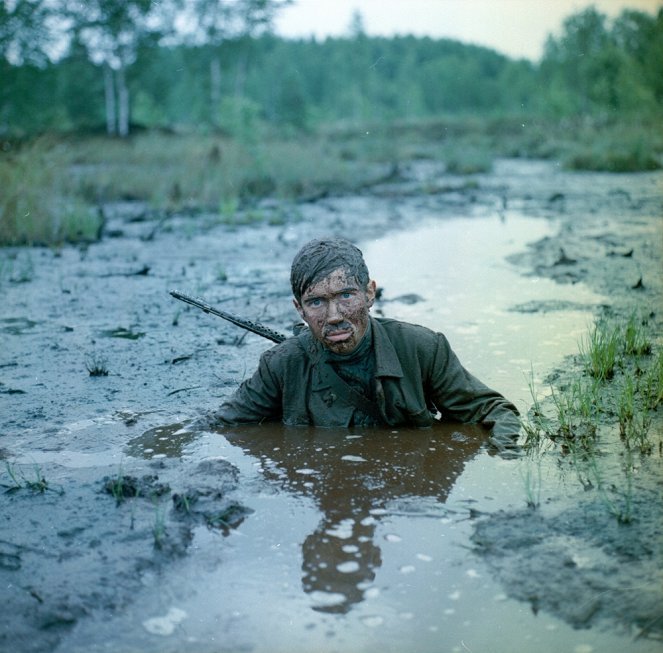
François Truffaut once said that a true anti-war film is impossible. His argument was that cinema aestheticizes everything it touches — that putting war on screen inevitably makes it cinematic, which makes it compelling, which means you've already lost the argument. You've turned a crime into a spectacle.
Come and See is the film that proves him wrong.
Directed by Elem Klimov and released in 1985, it's been called one of the most devastating films ever made. Roger Ebert put it in his Great Movies list. Sight and Sound ranked it the 41st greatest film of all time in their 2022 poll. The Guardian's Tim Lott wrote that it makes Apocalypse Now look lightweight. None of that adequately prepares you for watching it.
But the film itself is only half the story. The other half is how it got made — and what it cost everyone involved.
Eight Years in the Dark
Klimov began work on the screenplay in 1977, alongside writer Ales Adamovich, a survivor of the Nazi occupation of Belarus who had spent years collecting testimonies from other survivors. The original title was Kill Hitler. The State Committee for Cinematography blocked it immediately and kept blocking it for eight years. Their official objection was that the screenplay praised what they called "the aesthetics of dirtiness." Too realistic. Too dark. It depicted the war as the psychological destruction of a child rather than the story of Soviet heroism they wanted told.
Klimov finally got permission in 1984, under Gorbachev's glasnost policy, partly because the government wanted something to mark the 40th anniversary of the victory over Nazi Germany. He refused to change a single line of the screenplay. The only concession he made was the title. He chose Come and See from the Book of Revelation — the passage about the pale horse whose rider is named Death.
The Boy
Aleksei Kravchenko was 13 years old when Klimov hired him. He turned 14 during the nine-month shoot. He had never acted before. That was the point.
Klimov shot the film in strict chronological order so Kravchenko would psychologically experience the horror as it escalated, arriving at each new scene without having processed what was coming. The transformation across nine months is not performance. It is documented.
The starvation diet ran on 48-hour cycles. The crew tried to sneak him food — pastries, mandarins — until they understood why they couldn't. For the bog sequence, Klimov stripped off his waterproof suit and jumped into the freezing swamp alongside Kravchenko rather than watching from the bank. In the barn scene, Kravchenko was wearing contact lenses to change his eye color, packed so tightly into the crowd he couldn't breathe. When a lens fell out mid-scene, he had to reinsert it himself while surrounded. He developed severe conjunctivitis that left him unable to open his eyes without tears streaming down his face.
Klimov arranged for a psychotherapist to hypnotize Kravchenko before the most violent sequences. He was worried the experience would cause permanent psychological damage. The hypnosis didn't happen. Kravchenko chose to be present for all of it.
In the final mass scene, the extras were real war survivors. Their grief was genuine. Kravchenko was on the verge of breaking completely. Klimov walked directly ahead of him, whispering in a calm, steady voice: don't cry. Don't cry. Don't cry.
[AFFILIATE: Come and See — Criterion Collection Blu-ray, which includes a 2001 interview with Klimov and a 1985 making-of documentary that goes deeper on the production]
What the Film Is Actually About
The film depicts the Nazi occupation of Belarus between 1941 and 1944. Two million people were killed — one quarter of the country's entire population. Six hundred and twenty-eight villages were burned to the ground with their inhabitants inside.
The film's centerpiece is the Khatyn massacre of March 1943. A village of 157 people, fifty kilometers from Minsk. One hundred and forty-nine killed, seventy-five of them children, the youngest seven weeks old. The villagers were herded into a barn, the doors locked, the straw set alight.
Here's the part the Soviet government suppressed: the unit primarily responsible for the massacre — Schutzmannschaft Battalion 118 — was composed largely of Ukrainian nationalists and Soviet POWs who had chosen to collaborate with the occupying forces. The government didn't want this known. They buried it.
They went further. The Khatyn memorial, built in 1969, was deliberately promoted to create confusion with Katyn — a completely different site where Soviet forces had massacred Polish officers in 1940. The similar names were not a coincidence. Khatyn was deployed to muddy the waters around Katyn. Come and See was a direct confrontation with these layers of concealment, which is part of why Goskino spent eight years trying to stop it.
The Mirror
The film ends with a sequence that mirrors everything that came before it. Flyora — the teenage protagonist — finds a photograph of Hitler in the mud and begins to shoot it. The film reverses. We watch newsreel footage running backward through history until we reach a photograph of Hitler as an infant on his mother's lap. Flyora stops. He lowers his gun. He cannot shoot a baby.
Consider what Klimov did and didn't do during production. He survived Stalingrad as a child. He built a simulation of that survival and put a 14-year-old through it. Live ammunition. Starvation cycles. Freezing swamps. And then, at the point of maximum pressure, he offered the boy an escape hatch — the hypnosis, the whispered "don't cry," the act of getting in the water alongside him rather than watching from the bank.
Flyora reaches the root of evil and finds something he won't destroy. Klimov reaches the limit of what he'll put this child through and finds the same thing. The mercy is identical in both cases.
After the film came out — 29 million tickets sold, top prize at the Moscow International Film Festival — Klimov was elected First Secretary of the Soviet Filmmakers' Union. He used the position to release nearly 100 films that had been suppressed by censors. Then he walked away. In 2000, he said: "Everything that was possible, I felt I had already done." He never completed another film. He died in 2003.
Nine months of live fire and starvation and freezing swamps. Real bullets passing four inches above a child's head. All of it was a reconstruction. The real survivors of 1943 Belarus had no camera crew, no concrete slab for cover, no one whispering don't cry.
The film is not the tragedy. The history is. Come and See is just the only thing that looks at it without looking away.
Watch the full video essay on YouTube.