

Buzzard: Capitalism's Ugliest Little Con Man
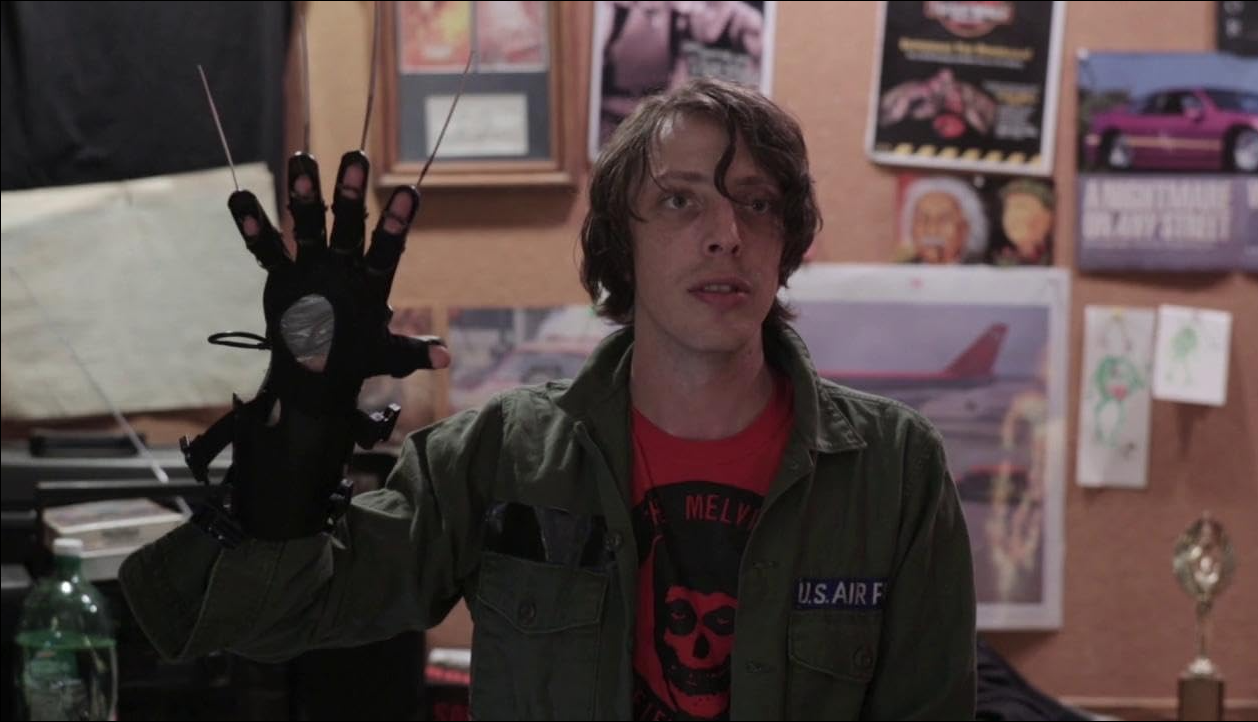
Marty Jackitansky opens Buzzard trying to scam the bank he's temping at, using a check-kiting scheme he clearly thinks is genius. It's not. It's the first sign of everything wrong and weirdly admirable about the guy, and it's the perfect entry point for a movie that spends the next 90 minutes asking whether Marty made himself this way, or the world did it for him.
Joel Potrykus's 2014 film, streaming on the Criterion Channel as part of a two-film set with his later Vulcanizadora, is a character study built entirely around one contradiction: Marty is anti-corporate to his core, but the only way he knows how to fight back is by putting in an honest day's work at being dishonest. He scams with the same discipline someone else might bring to a real career. That's the joke, and it's also the tragedy. He's convinced himself the hustle is revolutionary. Really, he's just a low-level criminal who never developed the impulse control to make his cons pay off.
That lack of foresight is the engine of the plot. When Marty starts to believe the law is closing in, he panics and runs, and the film becomes a slow-motion collapse — Detroit's emptied-out streets, Marty digging through garbage to survive, every bad decision compounding the last one. Potrykus doesn't rush any of it. There are long stretches where nothing happens except a guy sitting with his own boredom, and that's deliberate. Stagnation is the point. Marty isn't waiting for a plan. He's waiting for the next thing he can take.
Here's the part that could sink a lesser movie: Buzzard is genuinely rough. It's a micro-budget production, and it looks and sounds like one — the acting is uneven, the camera work is unpolished, the audio is inconsistent. Normally that's a liability. Here it works in the film's favor. The scrappiness matches Marty's world so closely that it stops reading as a limitation and starts reading as the whole aesthetic. This isn't a movie hiding its budget. It's a movie that couldn't hide it if it tried, and that honesty gives it a charm that a slicker production would sand off.
What keeps Buzzard from being just a hangout movie about a loser is the question underneath it. Just when Marty's situation looks unrecoverable, something shifts, and he's suddenly free to keep doing exactly what he's always done, with nobody left to stop him. Potrykus doesn't frame this as triumph. He frames it as a mirror. Marty has to sit with himself for a second, and so does the audience, because the film has spent 90 minutes building the case that Marty wasn't born a scammer. He was built into one. A generation raised with nothing to look forward to isn't going to play by the old rules, and Buzzard doesn't moralize about that. It just shows you the guy that economy produces and lets you decide how much sympathy he's earned.
It's not a film for everyone. If you need clean craftsmanship or a character to root for unambiguously, this isn't it. But if you want a portrait of modern economic drift with teeth, and you're willing to sit in the discomfort of a guy who's likable and repellent in equal measure, Buzzard delivers. It's a small movie asking a big question, and it doesn't pretend to answer it neatly.
Buzzard is streaming now on the Criterion Channel. If you're the type who'd rather build a shelf than a watchlist, Terminal City Collectibles has a rotating stock of used movies and comics worth digging through.