

I just watched Everest: The Other Side, and it's about quite possibly the most insane human beings on the planet.
Think about the kind of risk these people take. You can see the potential outcome in the clear light of day, and for some reason they choose to do it anyway. Most people who go after Everest take the standard route from the Nepal side. Jim Morrison and Hilaree Nelson, two elite ski mountaineers (people who climb big mountains and then ski down them), shared a dream: the direct North Face, on the Chinese side. Only a handful of people had ever climbed it, and nobody had skied it. The goal was to be the first.
I can't say much more without spoiling it, so I'll just say this: not everything works out.
It's a technical marvel
If you can, see this one in IMAX. The drone work is the kind that makes you forget you're sitting in a theater. Flying around climbers at the summit, with the air so thin and clear that every frame looks like glass, is a genuine technical achievement. It's gripping from start to finish, and I'm still asking myself how they got a lot of those shots, and how the cameras survived conditions that brutal.
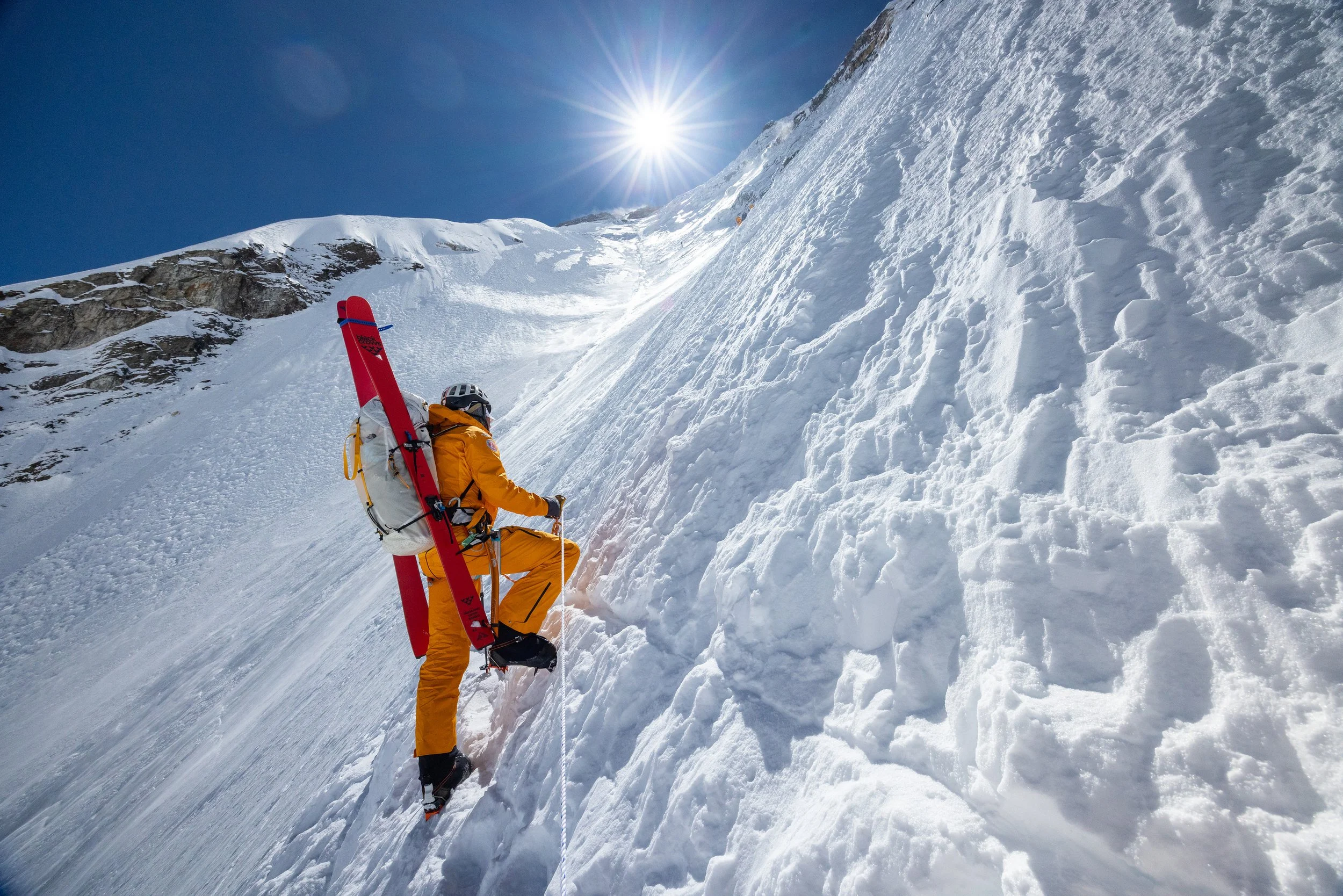
Jim Morrison climbs Everest. (credit: Jimmy Chin)
That scale matters here. A mountain documentary lives or dies on whether you feel the size of the thing, and this one gets it. On a laptop you'd be watching footage of Everest. In IMAX you're up there with them.
Credit goes to the team behind it. Everest: The Other Side is directed by Jimmy Chin and Elizabeth Chai Vasarhelyi, the filmmakers behind Free Solo, which won the Oscar for Best Documentary. They know how to point a camera at someone doing something terrifying and make you care about the person, not just the stunt.
The people are the story
These people are crazy, sure. But the longer the film goes, the less they look like the usual thrill seekers. They choose risk. They're surrounded by death, and they risk their own for the glory of achievement, that driving desire to complete an impossible task. That's completely foreign to someone like me, so I couldn't help asking myself whether it's an addiction. Some of them keep making these decisions with kids and family at home, and everyone involved seems to know exactly what the deal is.
The film also does a great job of contrasting two groups on that mountain. On one side are the foreigners who come to Everest to find themselves and to achieve greatness. On the other are the Sherpas, who have been there for a long time and see the mountain as significant to their culture, and as a necessity to survive. For one group it's a test of self. For the other it's culture and survival, and the film lets that gap speak for itself.
One of them stood out for me: Pur Bahadur "Yukta" Gurung, known simply as Yukta throughout the film. He's alongside Jim Morrison through thick and thin, and he's one of the most engaging people in it. What I loved is that he gets pulled in too. The Nepali guides are used to the south side of Everest, so the north side is a fresh experience for them as well, and you can watch Yukta become enraptured by it and feel that same burning desire to complete the challenge. Some of the team turn back. Some keep going.
Toward the end, the film lands on something much more profound than thrill-seeking. It isn't about the thrills at all. The mountain becomes a symbol of overcoming grief, and of getting as close to heaven as anyone can get. That's what I took out of it.
Should you see it?
Yes, and in a theater. It's riveting, it's intense, and it's the kind of film where the big screen is part of the experience. It opens October 30 in theaters and IMAX, runs a little under two hours, and is rated PG-13. There's no streaming date announced yet, so for now the theater is the only way to see it.